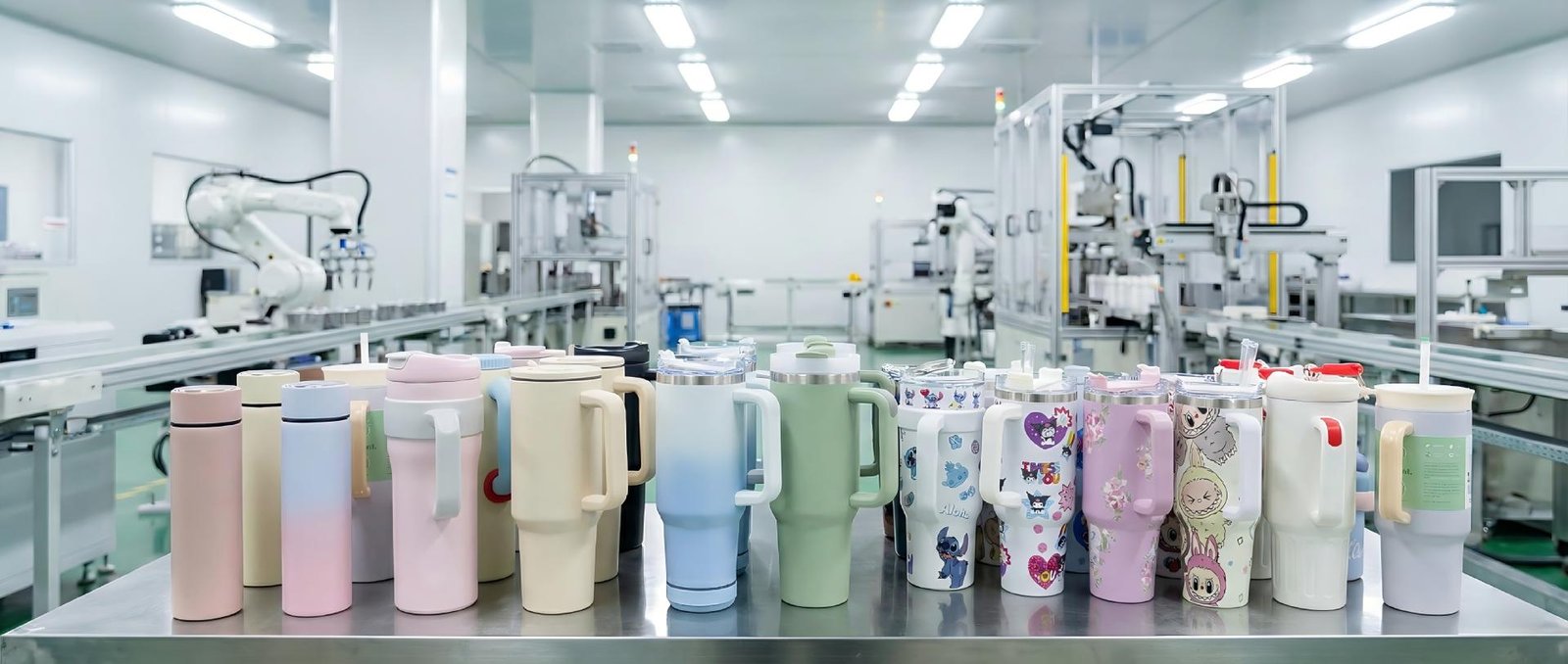
A Practical Guide for Brands, Importers, and Distributors
Stainless steel insulated tumblers are no longer a novelty product. In most sourcing projects, they are treated as a core, repeat-order SKU rather than a one-off item.
For brands, Amazon sellers, and distributors, the focus is usually not on whether insulated tumblers sell—but how consistently they perform across batches, markets, and seasons. This article outlines how these products are made, what actually matters when sourcing from a factory, and how OEM customization works in real projects.
Summary
This guide explains the manufacturing flow, OEM customization options, and quality/compliance requirements for stainless steel insulated tumblers, with a focus on achieving consistent performance across repeat orders. It highlights key processes (forming, vacuum insulation, finishing, lid assembly), typical B2B applications, and the practical factors that drive MOQ and cost. Buyers are advised to prioritize factory capability, production stability, and line-made samples over catalog comparisons to reduce defects and delays.
What Is a Stainless Steel Insulated Tumbler?
A stainless steel insulated tumbler is typically produced using double-wall vacuum insulation. The purpose is straightforward: reduce heat transfer so beverages stay hot or cold longer.
In export and wholesale markets, most tumblers are manufactured with:
- Food-grade stainless steel (commonly 18/8 or 304)
- Vacuum-sealed inner and outer walls
- Surface finishes such as powder coating or brushed steel
- BPA-free lids made from Tritan or PP materials
From a factory perspective, this is a mature category. The technical fundamentals rarely change—execution and consistency do.
Common Applications in B2B Markets
In B2B sourcing, insulated tumblers are rarely purchased for personal use. Typical buyers include:
- Private-label e-commerce brands
- Amazon and marketplace sellers
- Promotional product companies
- Retail and wholesale distributors
- Corporate gift and event suppliers
In many cases, buyers already know what they want. The challenge is aligning design, cost, MOQ, and delivery timing without compromising quality.
Key Manufacturing Processes
Understanding the production flow helps buyers avoid common misunderstandings during sampling and mass production.
1. Stainless Steel Forming
The inner and outer shells are formed separately through deep drawing. Thickness control at this stage directly affects weight and insulation performance.
2. Vacuum Insulation
Once welded, air is removed between the two walls. This step is critical—most insulation complaints trace back to unstable vacuum sealing rather than material choice.
3. Surface Finishing
Depending on order requirements, factories may apply:
- Powder coating (most common for private label)
- Spray painting
- Brushed or polished stainless steel
- Decorative finishes such as textured or rhinestone surfaces
Each finish has different durability and defect risks, which should be clarified before confirming samples.
4. Lid Assembly and Testing
Lids are assembled separately and tested for leakage, heat retention, and opening durability. In real projects, lid compatibility is one of the most frequent adjustment points.
OEM Customization Options
OEM customization is often the main reason buyers work directly with manufacturers instead of trading companies.
Common customization options include:
- Logo methods (laser engraving, silk screen, heat transfer)
- Color matching based on Pantone references
- Lid structure and accessory selection
- Packaging options (bulk cartons or retail-ready boxes)
- Capacity and shape adjustments within existing molds
It is worth noting that MOQ increases are usually driven by color or packaging changes, not by the tumbler itself.
Quality Standards and Compliance
For export markets, insulated tumblers typically need to meet:
- FDA food-contact standards (USA)
- LFGB compliance (EU)
- BPA-free material requirements
- Internal testing for insulation performance and durability
Experienced buyers usually request samples from the actual production line, not showroom samples, before confirming bulk orders.
How to Choose a Reliable Insulated Tumbler Manufacturer
In practice, buyers evaluate factories based on more than price. Key factors often include:
- Production stability during peak seasons
- Experience with export documentation and testing
- Internal quality control procedures
- Communication speed when issues arise
- Ability to maintain consistency across repeat orders
From long-term sourcing experience, delays and defects usually cost more than small unit price differences.
About H2DEEK
H2DEEK focuses on the manufacturing of stainless steel insulated tumblers and drinkware for wholesale and OEM projects. The company works primarily with brands, distributors, and importers, supporting private-label production and export requirements across multiple markets.
Final Note for Buyers
When sourcing insulated tumblers, reviewing factory capability and sample quality is often more important than comparing catalogs. Most problems appear after the first order—not before it.